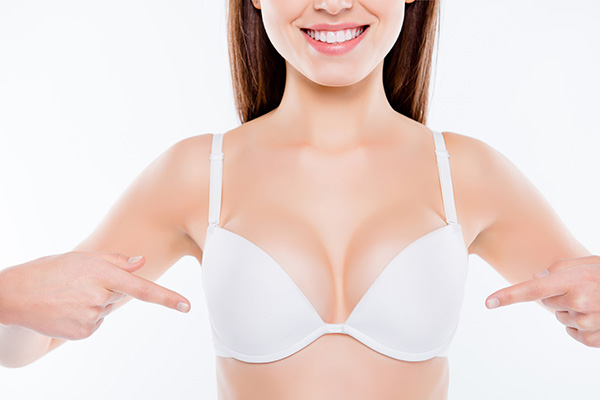
Many factors such as age, genetics, pregnancy and weight changes can cause the size and shape of breasts to change. Women who are dissatisfied with the size of their breasts often have difficulty with clothes and simply want to feel more feminine. A fuller, shapelier breast can be achieved with a breast augmentation. It is important to realise that breast augmentation cannot correct significant sagging or drooping of the breasts. In these instances, a breast lift is often necessary, which may be performed in conjunction with this procedure.
Procedure
In a breast augmentation, an incision is made under the breast, around the nipple or in the armpit. Silicone prostheses are then placed behind the breast or behind the chest muscle.
Anaesthetic
Usually conscious sedation as a day case in hospital or our procedure room.
Recovery
Moderately painful if under the muscle and less painful above the muscle
60% recovery in 5-7 days.
80% recovery in 6 weeks.
99% recovery in 6 months
Risks
Generally a low risk procedure. Risks are bleeding, minor imperfections and infection. Infection may lead to removal of the implant but this is fortunately rare.
As far as the implants are concerned, there is a risk of rupture, but this does not represent a health risk and is again, rare.
Some implants may change shape over time, and the tissue around the implant may harden resulting in a capsular contracture. Breastfeeding should not be affected but this cannot be guaranteed.