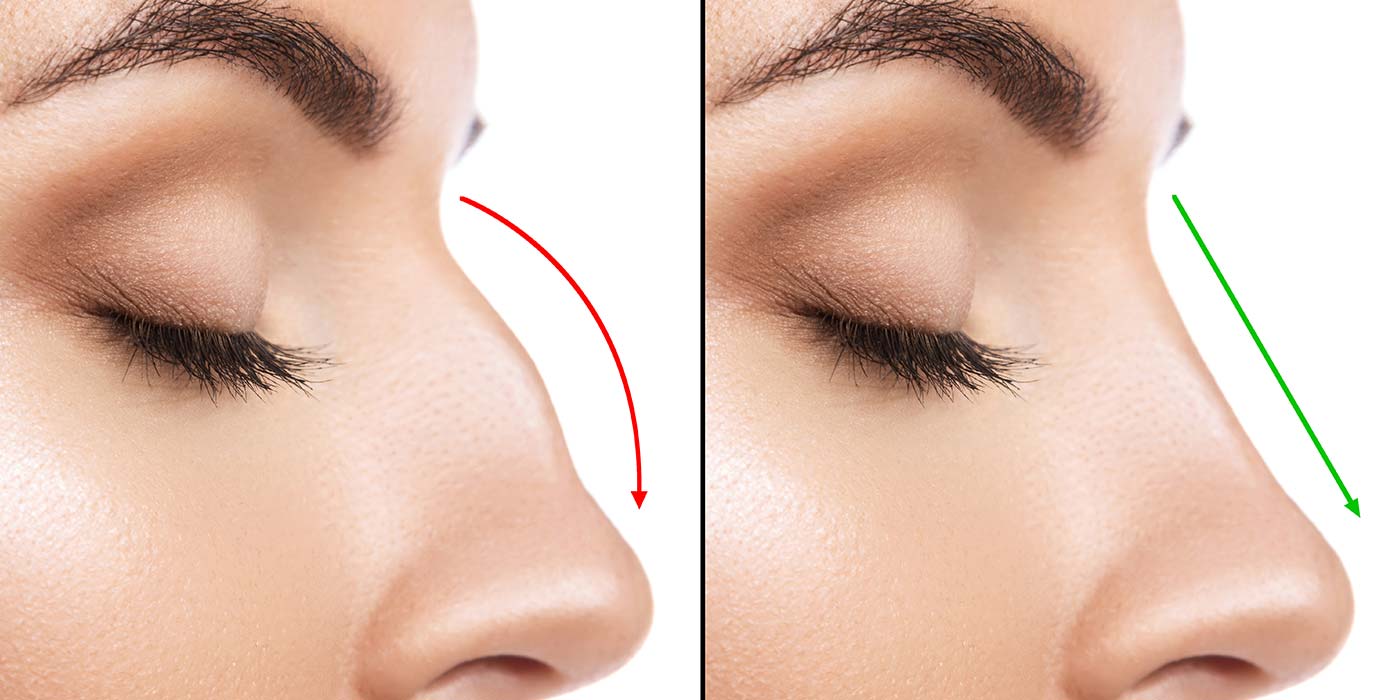
Rhinoplasty is a surgical procedure to reshape or reproportion the elements of the nose to improve the overall aesthetics of the facial proportions. It can restore the shape of a broken nose, correct a birth defect or improve certain breathing difficulties. The upper part of the nose is bone, with cartilage extending from the bone. Rhinoplasty can change any of these, or all three.
If you’d like a nose that’s straighter or narrower, shorter or fuller, this can be achieved.
A prominent nose can be made smaller, or a wide nose made narrower. A rhinoplasty can also correct a nose deformed by an injury, restoring symmetry.
Procedure
Fillers can sometimes be used to hide small imperfections, but cannot alter the shape of the nose significantly. Surgery usually involves an incision inside the nose to expose the framework of the nose. This is then reshaped. A splint is placed on the nose and occasionally an internal plug is placed inside the nose. Although it might appear painful, the surgery is usually well tolerated.
Anaesthetic
Fillers are done in the procedure room.
Surgery is done under conscious sedation in the procedure room or under general anaesthetic in theatre.
Recovery
80% recovery in 10-14 days.
Remaining 20% can sometimes take up to 4 months.
Risks
Mainly bruising and swelling. Minor imperfections can result from healing which is beyond our control.